
Redesigning Zelda BOTW's controls
- 4 ene 2021
- 10 Min. de lectura
Actualizado: 6 ene 2021

If you were a puppeteer, how would you wish it were your puppet's design?

Marionettes are characters, the heart of any story. So they stand for the ultimate tool to convey the audience what the narrative requires. The greatest puppeteers around the world aren't manipulators but actors. They don't recreate an emotion over a piece of wood by make it seems to cry. They cry to then reflect the emotion in it through its threads. And is this process where the spell can get vanished before to arrive to the audience.
To let the actor and the recipient merge for complete themselves, there must be a soul connection that is generated by the absence of consciousness filters. A cyclic loop of action and reaction motorized by an automatism that allows the puppet to react exactly in the way his master wants to. When that last one named feels he is not recreating an experience but living it, then the bound reaches the highest fusion level. As every human creation, this cycle just works with a matched dichotomy between art and technology. In this case, the human expression and the puppet's design. To avoid the puppeteer to use his conscience to connect with it, the mechanism must be built based in a single adjective. Intuitive.
Try to memorize a mathematical formula and then deduce another to see how your memory is judged as time goes by. The first method is rigid. A repetition process in which you just stock data without a link between them. Therefore, if for some reason you forget a single element, the chain gets broken losing the sense of its whole because you can't be transported into the mental hollow by the other elements that surround it. That's why the best memorization mechanisms are about creating links around information such as: personal or impersonal stories related to it, similar names that result familiar to you, and variants. What would be called a mnemonic.
The second method is fluid because it involves intuition, the ability to acquire knowledge without conscious reasoning. So the more obvious the connections you establish between ignorance and discovery, the less the puppeteer will depend on his consciousness. This process allows him to execute the design functions without needing to appeal to memory, simply by understanding the patterns and letting him go.

This marionette needs a rigid method because there's no logical connections between the action and their consequences. The fact of having to move the left cross' stick in order to move the right arm and vice versa, suffers a lack of distribution consistency that hinders the puppeteer's intuition flow. This design makes him to overpass an extra mental stage that consists in inverting the action after the intention, so it means that he must think about the cross at least a few milliseconds. This process reminds the person behind the threads that he's controlling a puppet and not being him breaking for complete the soul fusion. So apparently the cross over the marionette is just a tool with the function of connecting both subjects, but an imprecise design execution can corrupt the whole play. How many times have you awaken your anger in tense moments where the will and the consequential action are dissonance? "Fuck, I wanted to jump!” This sort of mistakes enhance the frustration because it's not your fault at all, it's because of the consciousness filter you use from the plan to the execution generated by the lack of coherence between both.
Over time mechanics has been evolving to generate links between players and characters more accurately. We can find companies that stay ingrained to the oldest tendencies like jumping with "A/cross" or attacking with "X/square" and others that go a step ahead. Mechanics such as the sprint by pressing the left joystick to add two functions related with movement on the same space, or using the triggers to attack in order to simulate the hit inertia. So it's not fair to be tolerant with bad control design after such amount of time evolving in this field, especially once you've played the game with probably the closest to perfection.

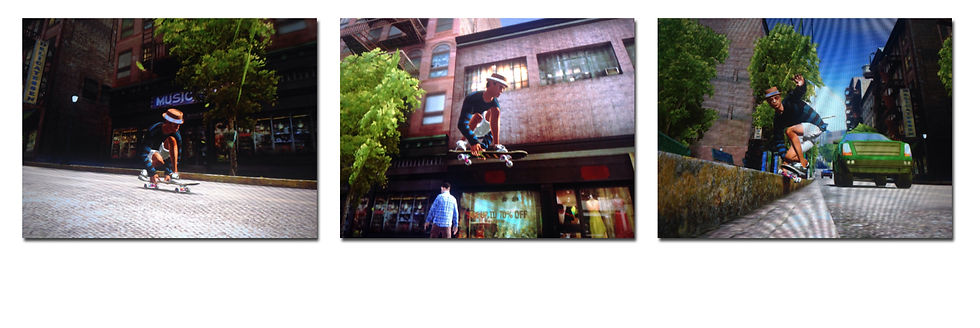
There's a reason why anybody talks about an iconic PS2' franchise but SKATE 4 is currently one of the most demanded games of the industry. In Tony Hawk you control a skater. In SKATE you are a skater.
To achieve that character's approach, Blackbox enforced a control design formula based in three main characteristics: unicity, logical placement, and correlative functions. Let's analyze just the three main mechanics of the gameplay to see the skeleton.
UNICITY
Every button has just one function or multiple with a common denominator.

Common denominator = body movement


Common denominator = feet & legs movement


Function = to grab
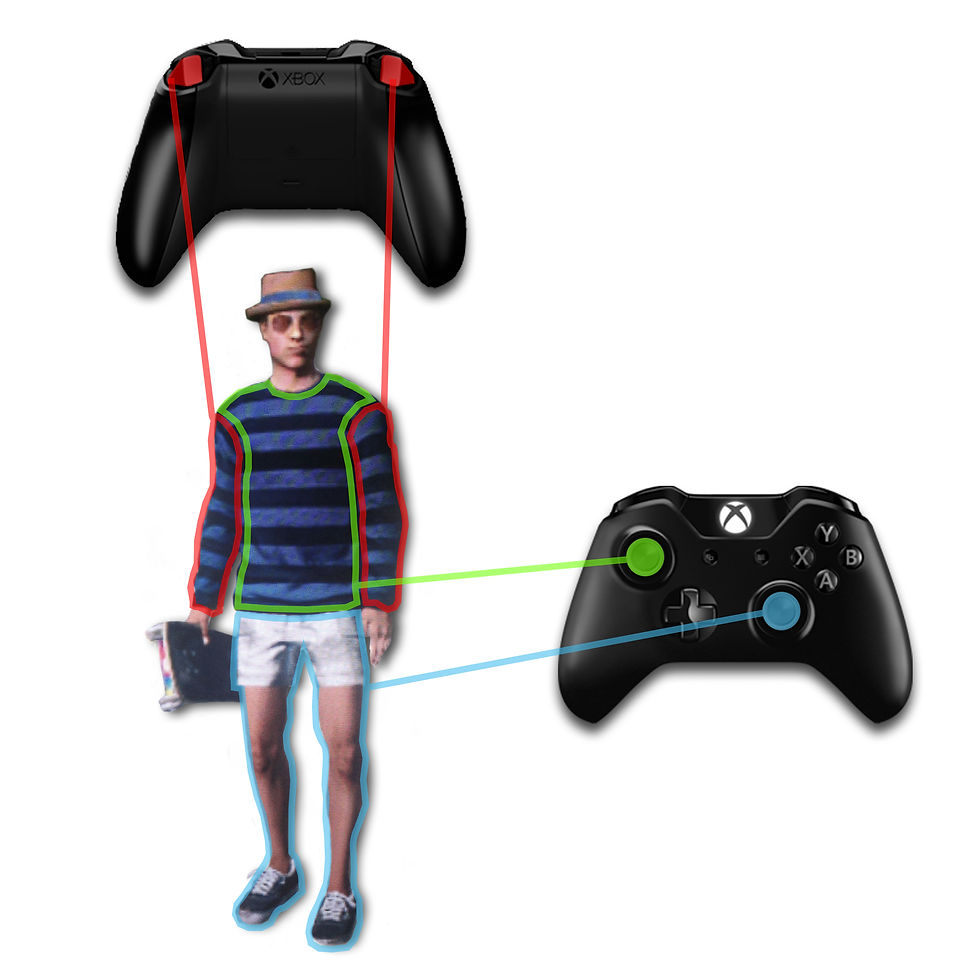
LOGICAL PLACEMENT
The space where the buttons are placed is related with the character's body part you move with them.
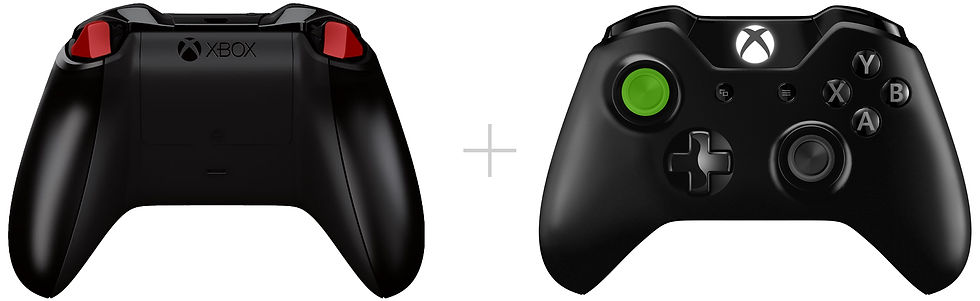
CORRELATIVE FUNCTIONS
Combination of two or more mechanics that generates a new one mixing their functions or common denominators.




This is how a control design scheme would look when performing a good mechanical isolation with correlation between its functions:

The structure it's built with a fluid method by the gray lines linking every function. Once you learn the three basic patterns there's nothing else to remember because their expansion consists in mixing them. The fact of no appealing to extra buttons to do it, reduces the probability of the player to overpass a consciousness filter remembering them with a rigid method.
That's why it's impossible to forget to play SKATE once you learn the basics, because it uses all the most effective control design philosophies to awake the player's intuition. But unlike this franchise, there are games that don't use all of them and the adaptation process is far longer, hindering exponentially the soul connection level between the player and the character.
There is one that despite being so enjoyable, after investing about 50 hours I still feel an abyss between myself and the character. And this is not because it does not apply any of the three methods described above, but none.

TOOL MECHANICS
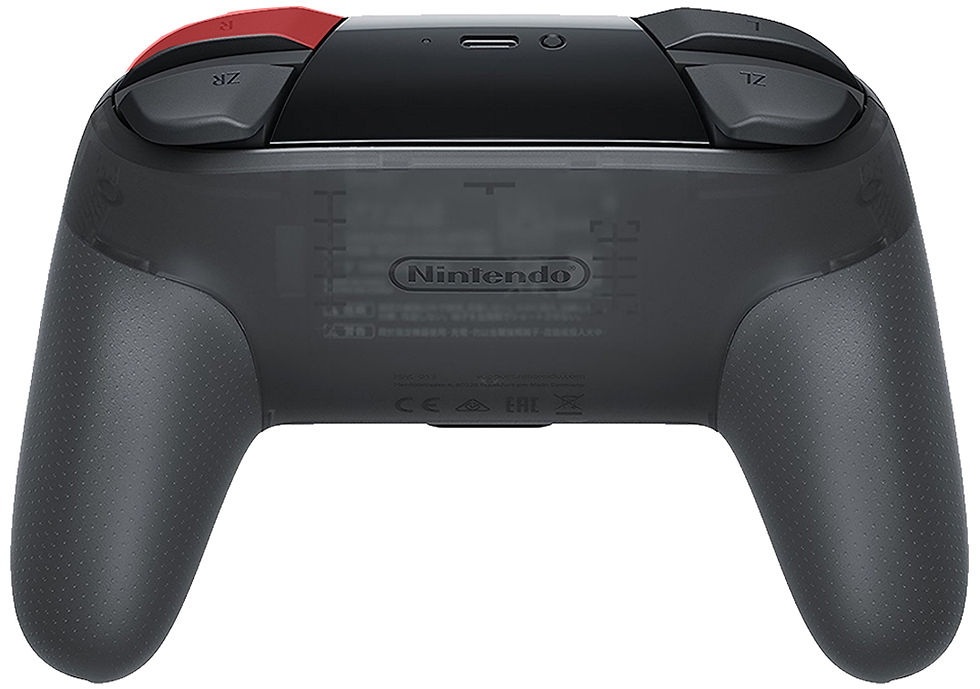
Red buttons with 100% of saturation = holding down button Red buttons with 50% of saturation = pressing them quickly


NINTENDO's intention is about creating unicity by placing each tool execution on a different gamepad button, just like Blackbox:

In this first layer there's already a minor mistake related with the logical placement. The buttons' distribution is mentally divided in 5 areas because of their proximity.

The fact of adding functions with a common denominator in separated areas decreases the relation between them. So in this case, the sword feels detached from the rest of tools. But there's a worse consequence with this isolation that unlike SKATE, corrupts the rest of the distribution.

A joystick has two dimensions, "X" and "Y". An advantage that Blackbox exploits integrating 48 functions from three categories in just one site: Ollie tricks, Nollie tricks and late tricks. This method allows the joystick to contain all the functions they need being independent from the rest, so to expand its possibilities you just need to appeal to the correlative ones without crossing with another button.
But in Zelda the buttons established as core just have one dimension, "Z". This limits the possibilities, allowing the player to execute just three actions with the sword, two with the bow and the rune, and one with the shield. So the designers need to use other buttons to deepen the system of each tool. And it is in this second layer where the control begins to get tedious.

The red buttons indicate the crossing between more than one function from different tools. In order to keep control unicity, the junctions should share functions with a common denominator between all the tools they're linked to. Let's check if that happens.


This one apparently shares it but there are two of them. When you cancel an attack, you are interrupting an action. When you save a tool, you're executing it. The main difference between both is that the first group of actions have two steps: to hold their respective button to charge and to stop pressing it to execute them. So when you press "B" you are intercepting the connection between both considering it as a cancellation in order to save arrows, energy or the weapon you're holding. But with the two others you're not using it as an intervention but as an isolated action.

To throw a sword and to throw a bomb have the verb of "throwing" in common. So if you make this button to always have this function changing the consequence depending of what the player is holding, generates unicity of action. But there's a subtle difference between both applications. With the sword you have to hold the button and then release it in order to execute the throwing. To throw the bomb you only need to press it.


Arrows are a bow's derivative, so making them to share the button linked to the shield's selector breaks the unicity of both.
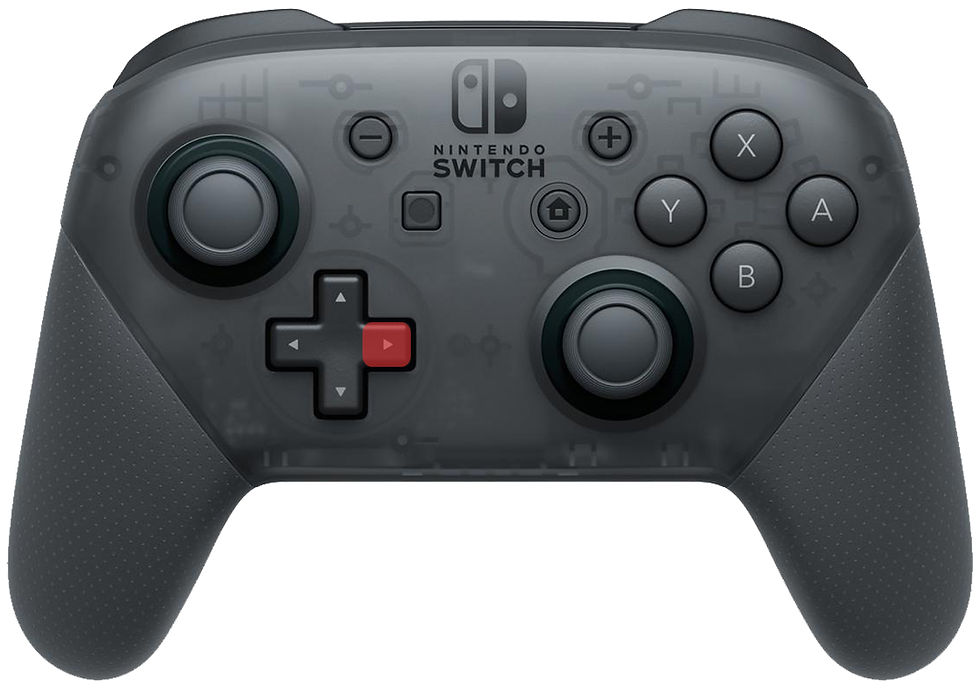

Same as above.


This is definitely the most chaotic crossing. To parry is a secondary use of the shield. To drop a bomb is a secondary manner of throwing it. And to use the other runes is a main function. So there's not a single action in common between them. It feels like the rubbish button for the shield and the bomb, where all the secondary actions they didn’t know where to put converge, and the one that takes more leadership for the rest of the runes. This methodology not just divides the runes control in two sections but hinders the shield unicity.
NINTENDO establishes a fairly compact first layer that isolates the main tools, but at expanding their functions the additions cross between each other making buttons to have more than one function without a common denominator. In other words, the method is rigid. So, how could be the design in order to make it feels fluent?
REDESIGN
Let's start with the solution of the collision between the bow and the sword selector by changing its placement:


If the player is not aiming with the bow = bow selector
The action of whistling to call the horse (which is executed by pressing the down arrow) has nothing to do with the tool’s zone. So, as one of the “A” functions is to talk with people, one possibility is to make the wish by holding it for 0.5 seconds. So it would be a sub common denominator that consists in the use of voice. It’s not perfectly matched but in that way we would have all the tool selectors within the same space, so we could select the bow without the necessity of aiming with it. With this first addition, the dissonance between the left arrow functions can be easily solved.

If the player is aiming with the bow = arrow selector
In this case, the bow and the arrows have a link because they are both part of the same tool. Now that the tools share the same gamepad's site with isolated buttons, as we have seen that the division of their execution hinders the derivative functions unicity, let's try other method.

If you hold down an arrow for 0.3 seconds, you access to the tool selector corresponding to the same. If you press it quickly, you take out the tool if it's not in your hand or you save it if you're holding it. Now we have the tool selector set integrated in one site. To select them, to take them out and to save them. In this way, all the other buttons are free to attach the derived functions of each tool. But this time let's try to apply a distribution in which the ones that cross in the same button share a clear common denominator.

"ZR" has three advantages respect "Y".
Being a button on the right side of the gamepad automatically creates an unconscious link with the right side of the character's body, so it establishes logical placement.
The progressive pressure simulates far precisely the sensation of inertia, which increases the connection with him.
The fact of mixing the actions of taking out the sword and using it within the same button disappears, which adds more variety of controls increasing in that way the unicity of each action.
And then, "R" just has one dimension but there's the chance of applying two related actions depending on whether the player holds down the button o he presses it quickly. So in the first case the function can be to drop the weapon you're holding with your right hand and in the second to hold the throwing in order to get farther. Both have the common denominator of "leaving an object", but the applied force can have an effect on dropping or throwing it.

As "L" is still empty, it can be exploited the fact of attaching the parry function to get proximity with "ZL" to generate logical placement. In that way, all the shield functions are in the left side of the gamepad connecting with the character's body part he's holding the shield with.

As in the sword's design, in that way the actions of taking out the bomb and using it are separated, which enhances the unicity of both actions.


Unlike the original design, with this methodology the main controls of the tools are not isolated. But let’s check if the unicity of the derivative mechanics has increased enough to reach a clear common denominator.

Common denominator = cancel throwing
The four applications have in common to intercept the process between holding a button to use the function of a tool and execute it. So there are no independent actions controlled by it anymore. The old design had not the option of cancelling the bomb throwing but with the second function added is necessary to cohesion it with the rest tools. This detail increases unicity making all the tools linked to the button of leaving an object, to have three applications: to drop, to throw by holding and to cancel the throwing. All of them except the bow, which would not have sense to throw it to hit the enemies if it's not with arrows.
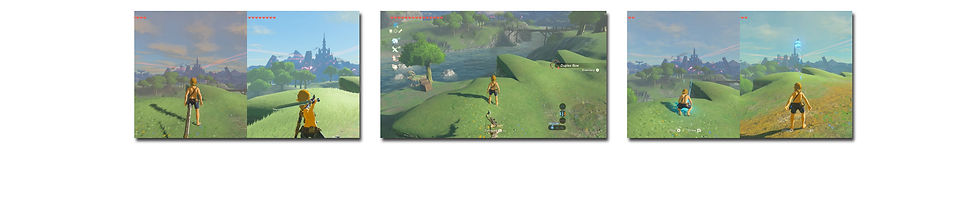
Common denominator = leave the object you're holding (right arm)
Have you ever thrown a weapon as a shortcut because of being about to break it and because of finding another with no having space in the inventory? But to wait until you hold the weapon to prepare the action and the fact of using the last hit of it because of the impact against the ground, makes you to reconsider that option. Adding the second layer to that button by the pressure, you could drop it directly with no necessity of loading the throwing and no damaging it if you don’t hold the button. Obviously the possibility of doing it with the other runes other than the bombs would not be available.


Common denominator = use the tool you're holding (right arm)
This is a good example of why control design and game development must be crafted at same time having both in consideration. To make this distribution coherence at all, Link should hold the Sheikah with the right hand. This detail would reinforce the distinction between this three tools and the shield because of the body space they occupy.
CORRELATIVE FUNCTIONS
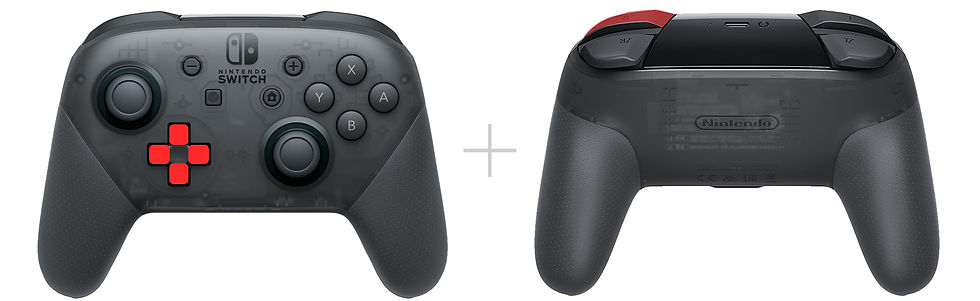

Now that there’s only one button related with the action of leaving an object, there could be a shortcut to drop weapons just by accessing to the fast selector and pressing it while you have the marker over the weapon you want to drop. We could do it with all the weapons in a matter of seconds with no necessity of accessing to the menu.
There are a lot of visionary design elements in this title, especially with regard to the relationship between the player and the elements of the environment, and the vivacity of the world accordingly to it. But such a number of hours are not enough for me to connect completely with Link to the point of forgetting the gamepad's existence. Every time I make a mistake or cross a filter of consciousness to perform an action, the dive gets broken. And this is because the control design is not just a tool that allows the player to control the character. It is the most important feature to make the player be the character.


Comentarios